
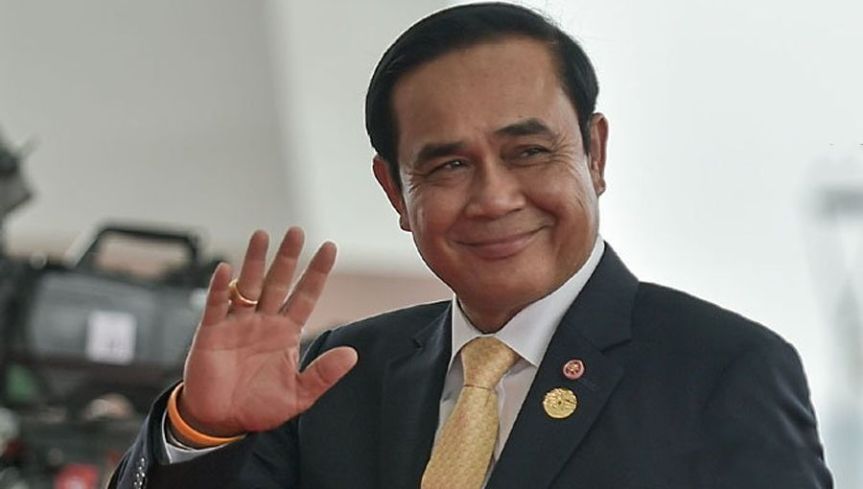
Thailand’s political landscape is set to undergo a significant change as the country’s caretaker prime minister, Prayut Chan-Ocha, announced his retirement from politics. After an unsuccessful bid to extend his rule, Prayut’s decision signals a shifting political landscape following the defeat of pro-establishment parties in the recent general election held in May.
Prayut’s resignation from the United Thai Nation Party, which he joined earlier this year in a bid to secure another term in office, marks the end of his near-decade-long rule as junta leader and civilian premier. The outcome of the election tipped the balance of power in favor of pro-democracy parties, with Pita Limjaroenrat emerging as the frontrunner to succeed Prayut.
The journey leading to this decision began in 2014 when Prayut initially seized power through a military coup. Following a subsequent election in 2019, he continued to serve as the head of a civilian government. In his Facebook post on Tuesday, Prayut reflected on his time in office, stating, “As prime minister, I dedicated myself to protect the nation, the religion, and the monarchy and worked for the benefit of the beloved people. From now on, I’m retiring from politics.”
During his short tenure campaigning with the United Thai Nation Party, which secured 36 seats in the 500-member House of Representatives, Prayut expressed gratitude for the experience. However, the party has made it clear that neither Prayut nor party leader Pirapan Salirathavibhaga will be nominated to challenge Pita’s bid for the prime ministerial position.
As the nation anticipates the selection of Thailand’s next prime minister, attention turns to the various potential outcomes and the impact they may have on the country’s political landscape. Thailand, a Southeast Asian nation rooted in a rich cultural heritage, is poised for a new chapter as it navigates the path towards further democratization.
Prayut Chan-Ocha’s retirement from politics marks a significant turning point in Thailand’s political history. Following the defeat of pro-establishment parties in the recent election, the nation awaits the emergence of a new leader who will shape the trajectory of Thailand’s democracy. As the country transitions, the hopes and aspirations of its people remain central to the unfolding political landscape.
 The Business Press