
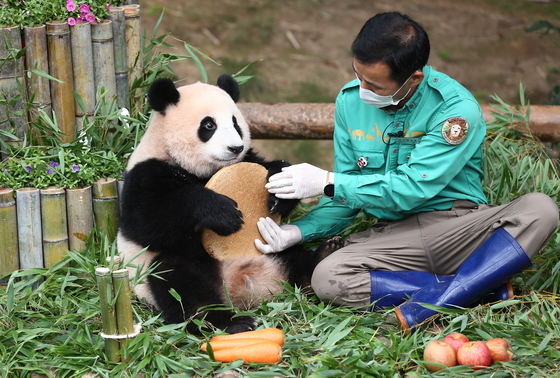
Many countries around the world have the privilege of hosting the rare and beloved giant pandas. While South Korea recently celebrated the birth of twin cubs at Everland theme park, there is a bittersweet truth behind these adorable bears. In a unique loan program initiated by China, almost all pandas, even those born abroad, are considered the property of China.
China has long utilized giant pandas as part of its “panda diplomacy” strategy, gifting these charming mascots as goodwill gestures between nations. The National Zoo in Washington, D.C. famously received two pandas as a symbol of warming relations in 1972. This initiative has not only cultivated cooperation and strengthened diplomatic ties but also served as a unique opportunity for joint research and broadening panda conservation efforts worldwide.
With concerns about dwindling panda populations, China transitioned from gifting to loaning pandas in the 1980s. Zoos across the globe now participate in a captive breeding program by hosting pandas on loan for 10 to 15 years. This arrangement comes at a considerable cost, with zoos paying up to $1 million per year, which is funneled into China’s panda conservation efforts. Additional expenses for the care and insurance of these remarkable bears are borne by the host countries.
According to the loan agreements, pandas born outside of China also belong to China. Since 1985, China has mandated the return of loaned pandas’ offspring, along with a “baby tax” of at least $200,000 per cub. Few exceptions exist, with one such example being Xin Xin, a 33-year-old female panda born in Mexico before the shift from gifting to loaning.
At times, practical and political reasons have prompted the early termination of panda leases. Zoos facing financial difficulties, such as one in Finland and another in Canada during the pandemic, have considered returning their loaned pandas. Furthermore, pandas have occasionally been recalled due to the escalating geopolitical tensions between China and host countries. Nevertheless, public pressure has also influenced decisions, as seen with the case of Ya Ya in the Memphis Zoo.
While controversies and discussions surrounding panda diplomacy persist, it is noteworthy that the tradition is far from over. In South Korea, the panda Fu Bao has captivated hearts around the world and fostered deep connections with her caretakers at Everland. As negotiations for her return to China loom, there are voices from both South Korea and China that express a desire for Fu Bao to remain, further extending the love and care she receives.
The story of pandas on loan from China is a tale of both joy and farewell. These enchanting animals have charmed people worldwide and symbolized collaboration through panda diplomacy, all while belonging to and being returned to China. As we admire these incredible creatures, we appreciate the delicate balance struck between conservation efforts, diplomatic relationships, and the ultimate aim of protecting China’s national treasure.
 The Business Press