
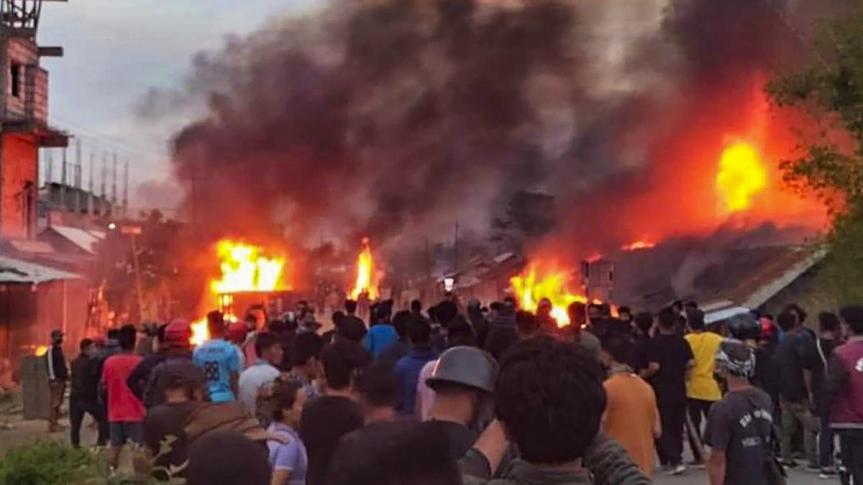
The Indian state of Manipur is currently facing a severe crisis, with escalating violence, the destruction of churches, loss of lives, and a significant displacement of people. Despite the gravity of the situation, Prime Minister Narendra Modi has remained silent, causing concerns over his government’s response to the conflict. In this article, we shed light on the unrest in Manipur and the urgent need for global attention to address the broader threat to democracy in India.
Prompted by the lack of response from world leaders, organizations like Hindus for Human Rights have taken on the responsibility to bring attention to the crisis unfolding in Manipur. With a focus on mobilizing Hindus to advocate for democracy and to oppose Hindu nationalism, they have emphasized the importance of embracing the pluralistic teachings of their faith.
For those unfamiliar with the crisis in Manipur, it is essential to grasp the intricate dynamics shaping this conflict. Since joining India in 1949 against the wishes of many Manipuris, particularly among the Naga community, the state has witnessed secession movements, ethnic rivalries, and human rights violations by security forces. These issues have persisted over the years, and currently, the rise of Hindu nationalism is further exacerbating tensions between different communities.
The recent surge of violence in Manipur can be traced back to a ruling by Manipur’s High Court in April. The judgement upheld a state government policy led by the BJP, which intended to grant Scheduled Tribe status to the Meitei community. However, this move faced fierce opposition from the Naga and Kuki tribes, who argued that it would undermine the rights of historically marginalized groups. Protests against the policy subsequently spiraled into a series of violent clashes, reprisals, and even calls for war.
Regrettably, neither the BJP-led state government nor the central government has adequately addressed the plight of the Manipuri people caught in the violence. In response to the European Parliament’s actions, the Indian government has retained a lobbying firm in Europe, attempting to influence discussions and prevent any resolution from being passed. It becomes evident that Modi is unwilling to publicly address the situation or allow it to be discussed internationally.
As French President Emmanuel Macron prepares to welcome Prime Minister Modi during his state visit coinciding with Bastille Day, he has a unique opportunity to highlight the crisis in Manipur. The European Parliament’s deliberations provide political cover for Macron to address this sensitive matter. By raising the issue, Macron can demonstrate his commitment to liberalism and democracy, especially on a day that symbolizes the French revolution and the principles of liberté, égalité, and fraternité.
The crisis in Manipur demands prompt international attention to protect democracy and human rights. By addressing the situation during Prime Minister Modi’s visit, French President Macron can reaffirm his dedication to liberal values and shed light on the pressing need for action. As the world grapples with various challenges, it is crucial to stand in solidarity with those facing oppression and strife, such as the people of Manipur.
 The Business Press