
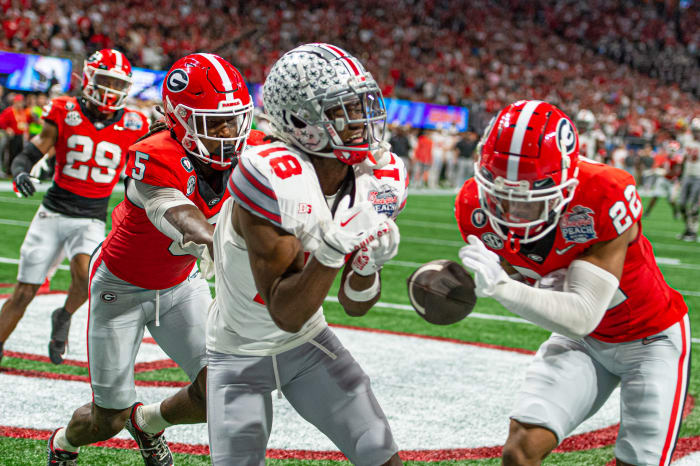
In the nail-biting 2022 Peach Bowl College Football Playoff Semifinal, the clash between the Georgia Bulldogs and the Ohio State Buckeyes reached a critical moment when star wide receiver Marvin Harrison Jr. was forcefully taken out of the game due to a hit that ignited a storm of debate. Although the hit initially drew a targeting penalty, the call was subsequently overturned, fueling controversy and leaving many questioning the fairness of the decision. This unexpected turn of events undoubtedly had a significant impact on the outcome of the game, ultimately leading to the Bulldogs’ 42-41 victory and their path to another national championship.
The defining moment of the game occurred when Georgia safety Javon Bullard made contact with Marvin Harrison Jr., resulting in his premature exit from the match. Caught by ESPN College Football’s cameras, the hit prompted discussions about whether it should have been flagged as targeting. Although the officials initially determined it to be an illegal hit, the call was surprisingly reversed, adding fuel to an already heated controversy.
While some endorsed the officials’ decision to backtrack on the targeting call, arguing that it was a fair judgment, others, such as Big Ten officiating chief Bill Carrollo, voiced their disagreement. Speaking at Big Ten media days, Carrollo expressed his belief that despite not being called targeting, the hit should have been penalized due to its severity. This discrepancy in opinions compounded the controversy surrounding the overturned decision.
The Peach Bowl hit and its subsequent reversal spurred widespread discussions about the inconsistent enforcement of targeting penalties during the previous season. The emphasis on ensuring accurate rulings for targeting calls led to a multitude of overturned decisions, and the game between Georgia and Ohio State was no exception. Furthermore, this contentious incident gained substantial traction on social media platforms, sparking intense debates among fans and experts alike.
Reflecting on the incident, Marvin Harrison Jr. openly expressed his belief that the outcome of the game might have been different if he hadn’t been knocked out. The lingering question of “what if” has become an intriguing topic in the realm of college football. It underscores the significance of targeting calls and their potential influence on the trajectory of games, highlighting the impact that correct enforcement of rules can have on the sport.
The controversial hit and subsequent reversal of the targeting call in the Peach Bowl between Georgia and Ohio State continue to generate conversations and debates. The incident’s significance lies not only in its impact on the outcome of the game but also in emphasizing the need for consistent and precise enforcement of targeting rules. As college football progresses into the coming seasons, how targeting is called and adjudicated will undoubtedly remain a captivating storyline, indelibly shaping the way games unfold and adding another layer of intrigue to the sport.
 The Business Press