
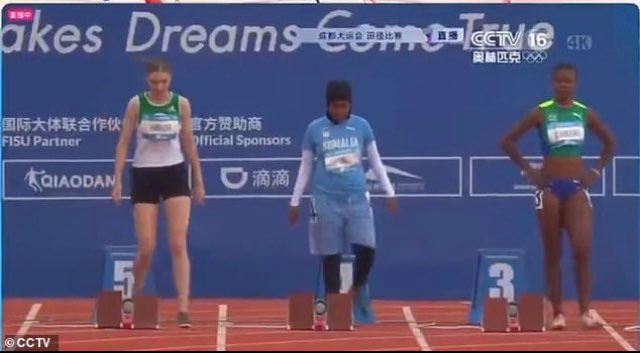
A race at the World University Games rarely steals the spotlight. However, a recent incident involving Somalia’s running representative in the women’s 100m race has ignited a firestorm of controversies. The performance of Nasri Ali Abukar has raised questions about the selection process, competence, and integrity of the Somali Athletics Federation.
Ali Abukar’s lackluster performance in the 100m race at the World University Games left spectators astounded. Crossing the finish line in 21.81 seconds, she not only finished last in her heat but also displayed poor running form. Her evident lack of training and experience raised eyebrows, especially considering Somalia’s rich running culture from which the nation could have chosen accomplished athletes.
The stark contrast between Ali Abukar’s performance and the success of Somalia’s male representative in the 1500m race calls attention to potential irregularities in the selection process. While qualifications for the 1500m were met with an impressive display by another Somali athlete, the reasons behind Ali Abukar’s participation seem dubious.
Social media posts by Khadija Aden Dahir, the senior vice president of the Somali Athletics Federation, congratulating her niece on her participation in the World University Games, have fueled speculations of corruption and nepotism. Though not confirmed, the apparent familial connection between Ali Abukar and a high-ranking federation member raises concerns about favoritism undermining the integrity of the selection process.
Despite the growing public outcry, there has been no official statement from the Somali government in response to these allegations. This lack of transparency further fuels the perception that something amiss occurred during the selection of athletes to represent the nation. The silence from the authorities only deepens the sense of disappointment and distrust among the public.
 The Business Press