
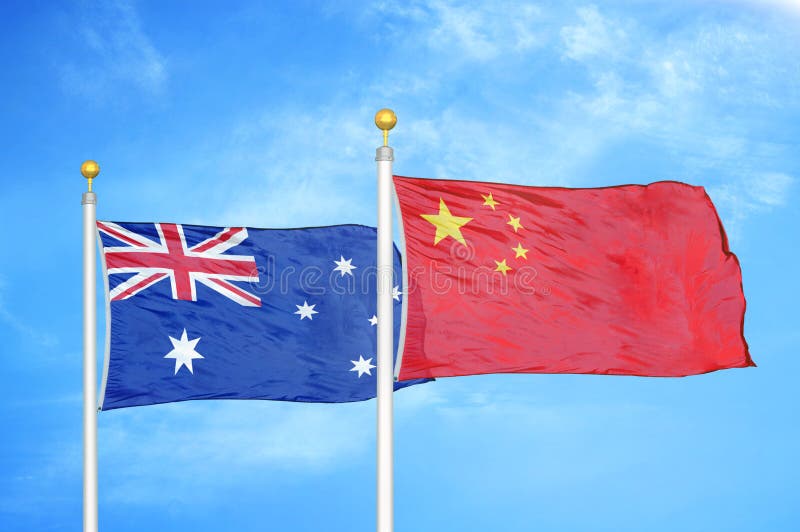
Australia and China recently commenced their first high-level dialogue in three years. The meeting, held in Beijing, signifies a potential thaw in relations between the two countries, who have grappled with various issues including human rights, COVID-19 origins, and trade disputes. With a focus on trade, people-to-people links, and security, both Australia and China expressed the need for collaborative efforts while cautioning against Cold War mentalities and trade protectionism.
Positive Developments Amidst Challenges:
Despite acknowledging the progress made, Craig Emerson, the head of the Australian delegation and former trade minister, emphasized the need for continued efforts to bridge the gaps in the bilateral relationship. The dialogue signifies a significant turning point after a period of strained ties, during which Australia entered into a nuclear partnership with the United States and the United Kingdom, granting access to nuclear-powered submarines. However, Australia’s current Foreign Minister, Penny Wong, has been working towards stabilizing the relationship since her party’s electoral victory last year.
Engagement at ASEAN Summit:
Further demonstrating their commitment to dialogue, Australia’s Prime Minister, Anthony Albanese, engaged with China’s Premier Li Qiang during the sidelines of the Association of Southeast Asian Nations summit in Indonesia. Describing the engagement as positive, Albanese shared his plans to visit China later this year, accepting an invitation from President Xi Jinping. The leaders emphasized the importance of cooperation, while acknowledging that disagreements may arise, but mutual engagement remains vital.
Reversing the Damage Done:
Australia’s relationship with China deteriorated significantly during the pandemic, exacerbated by Australia’s introduction of laws to prevent covert foreign interference in domestic politics. The ban on Huawei from participating in Australia’s 5G network roll-out due to security concerns and the call for an independent investigation into the origins of COVID-19 further strained relations. In response, China imposed substantial tariffs on Australian barley, wine, beef, coal, and other products—a move regarded by many in Australia as punitive. However, in a recent positive development, China lifted the tariff against Australian barley.
Highlights and Ongoing Challenges:
While the recent dialogue is promising, Australia hopes for progress concerning the cases of five detained Australians in China, including journalist Cheng Lei, who has been imprisoned for three years. Australia continues to advocate for positive developments in these cases, emphasizing the importance of fair treatment and due process.
The commencement of the high-level dialogue between Australia and China marks a significant step towards normalizing relations after a period of tension and strained ties. Both countries recognize the need for collaboration on trade, people-to-people links, and security, while opposing Cold War mentalities and trade protectionism. Positive developments, such as the dialogue and lifting of tariffs on Australian barley, indicate a willingness to rebuild the bilateral relationship. As both nations continue to navigate challenges, a commitment to engage in their national interests while cooperating where possible remains paramount.
 The Business Press