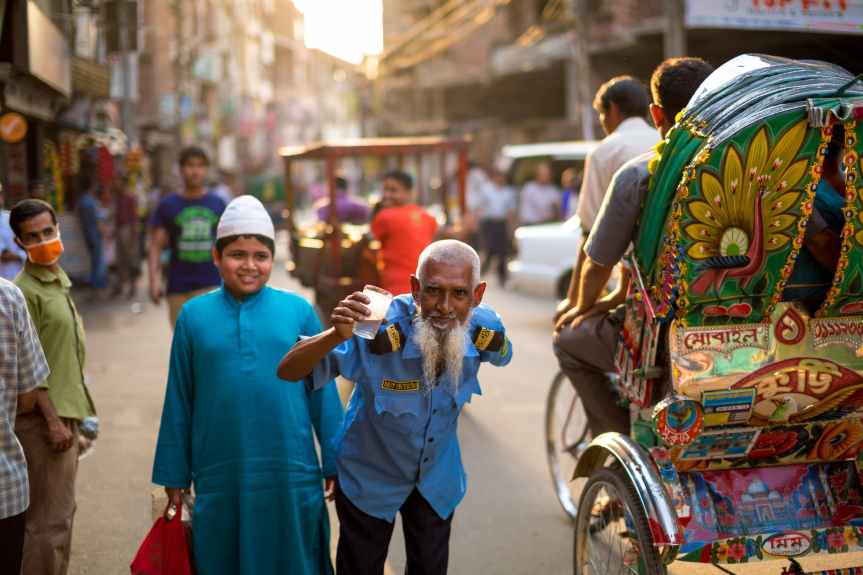
Bangladesh, the economic powerhouse of South and Southeast Asia, has achieved remarkable economic growth in recent years, transforming itself into a thriving nation with a GDP of $465 billion. This incredible progress was emphasized during a significant conference in Brussels, where key stakeholders from Bangladesh and the European Union discussed the potential for trade and investments between the two regions.
Ambassador Mahbub Hassan Saleh, representing Bangladesh at the conference, highlighted the nation’s pride in its achievements while emphasizing their commitment to envisioning a promising future. Bangladesh aspires to become an upper-income country within a decade and aims to be recognized as a developed nation by 2041. To support these ambitions, the country has embarked on impressive infrastructure projects that have not only transformed its transport system but also facilitated new trade routes within and beyond its borders.
One such noteworthy project is the Bangabandhu Sheikh Mujibur Rahman Tunnel, an underwater tunnel spanning over nine kilometers beneath the mouth of the Karnaphuli River in Chittagong. This tunnel, the first of its kind in South Asia, forms a vital part of the Bangladesh-China-India-Myanmar Economic Corridor. Complementing such initiatives, the European Commission, along with the European Investment Bank and the Asian Development Bank, is financing the upgrading of the railway connecting Chittagong Port to the wider region.
Peteris Ustubs, the Director for Asia in the European Commission’s Directorate-General for International Partnerships, expressed confidence in Bangladesh’s progress and emphasized the need for a renewed EU-Bangladesh agreement. The recent visit of Prime Minister Sheikh Hasina to Brussels enhanced discussions on this front and signaled a fresh focus on bilateral trade and investment.
Ambassador Mahbub Hassan Saleh emphasized that Bangladesh is not only on a path to success but is also determined to move beyond the status of a least developed country. The Prime Minister’s campaign for extending existing terms of trade until 2032 aims to ensure a smooth transition to a new trade and investment partnership. The current arrangement, known as ‘Everything But Arms’, enables tariff and quota-free access to the European market, with the exception of weapons. Furthermore, Bangladesh is actively encouraging foreign investment in all sectors except defense. The fruitful bilateral meeting between Prime Minister Sheikh Hasina and Commission President Ursula von der Leyen resulted in a new partnership agreement between Bangladesh and the EU, taking their relationship to the next level.
Professor Shibli Rubayat-Ul-Islam, Chair of the Bangladesh Securities and Exchange Commission, underscored the longstanding friendship between Bangladesh and Europe. He emphasized that the purpose of their presence in Brussels was to foster trade, investment, and business partnerships, rather than seeking aid or loans. Garment exports, which constitute over 80% of Bangladesh’s foreign exchange, play a significant role in the country’s economy. In the last decade, European imports of garments from Bangladesh have steadily increased at an average annual rate of more than 9%, making Bangladesh the EU’s leading clothing supplier in terms of quantity. Additionally, Bangladesh’s transformed transport infrastructure offers Europe’s exporters access to approximately half of the world’s population, underscoring the regional significance of the country.
In a video message, Prime Minister Sheikh Hasina acknowledged the remarkable transformation of Bangladesh over the past 15 years. Despite economic shocks such as the Covid pandemic and the war in Ukraine, the nation has consistently maintained an annual growth rate of 6-7%. Bangladesh has become a role model for developing countries, as recognized by former United Nations Secretary-General Ban Ki-moon. Looking ahead, Bangladesh’s economy is poised to surpass $0.5 trillion next year with the potential to reach $1 trillion if it continues its current trajectory.
Bangladesh’s spectacular economic progress, combined with its ambitious goals for the future, sets an inspiring example of resilience, growth, and potential. The partnership between Bangladesh and the EU holds significant promise for both parties, fostering trade, investment, and strengthening their shared values of democracy, secularism, and people’s freedom.
 The Business Press