
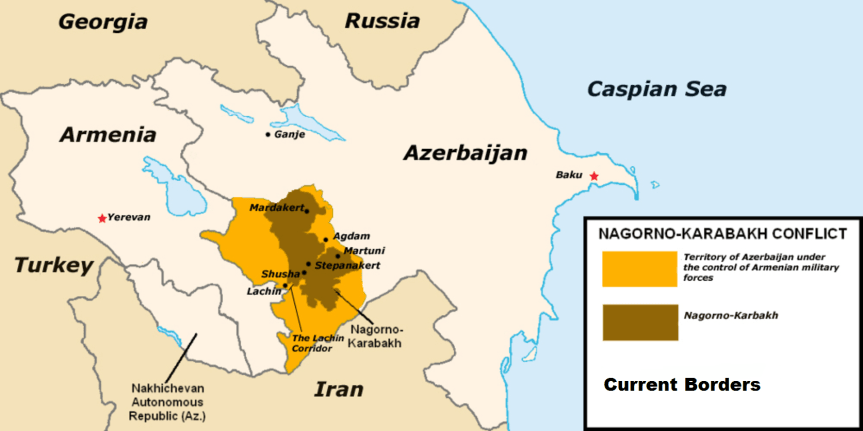
In a recent meeting with journalists in Brussels, two senior members of Azerbaijan’s parliament shed light on their country’s vision for future relations with Armenia. With recently restored international recognition of its sovereignty over the entire Karabakh region, Azerbaijan’s parliamentary representatives expressed surprise and concern over some European partners’ initial reluctance to accept this new reality.
Tural Ganjaliyev, the Chair of the EU-Azerbaijan Parliamentary Cooperation Committee, highlighted the unexpected reaction from European countries following the 2020 Karabakh War and subsequent events. Azerbaijan had long sought support for its territorial integrity, and it was assumed that such support would be acknowledged and respected. However, the reluctance of some European Union member states to accept the new reality of Azerbaijan’s restored sovereignty has puzzled Azerbaijani officials.
Ganjaliyev was questioned about the steps taken to welcome Armenians back to Karabakh following the conflict, particularly considering the accusations of ethnic cleansing and displacement. He attributed the exodus of Armenians to the influence of the “10,000 illegal armed forces of Armenia that were present in Karabakh” and emphasized that Azerbaijan had called for the Armenian population to stay. Additionally, the Azerbaijani government has launched a website to assist Armenians in registering for their return, although Armenia has unfortunately blocked access. A recent visit by a UN mission reported no incidents against Armenians, further reinforcing Azerbaijan’s commitment to fostering reconciliation.
Ganjaliyev further underscored Azerbaijan’s commitment to a two-way street of reconciliation. Just as Azerbaijan hopes for the return of Armenians to Karabakh, they also urge Armenian authorities to facilitate the return of the 300,000 Azerbaijanis expelled in the 1980s. Moreover, he advocated for regular UN missions to assess the situation and provide a neutral evaluation of the conditions on the ground. Azerbaijan’s vision for the future entails mutual understanding, coexistence, and the establishment of lasting peace.
Joining Ganjaliyev was Vugar Bayramov, a member of the parliamentary committee for Economic Policy, Industries, and Enterprise, who emphasized the potential positive impact of ending the conflict on regional economies. The three countries of the South Caucasus—Azerbaijan, Armenia, and Georgia—have the opportunity to form a strong single market, harnessing the benefits of the Middle Corridor trade route that connects Asia and Europe via the Caspian Sea, the South Caucasus, and Türkiye. Bayramov highlighted the potential for a mutually beneficial relationship, where Azerbaijan invests in Armenia, akin to its current investments in Georgia and Türkiye.
Bayramov acknowledged that building a lasting and sustainable peace would require time but remained optimistic about the normalization process, which holds the potential for significant progress. Communication and cooperation between Azerbaijan and Armenia could lay the foundation for enduring peace in the region. Moreover, this collaboration has the potential to stimulate economic growth and prosperity, benefiting all parties involved.
Azerbaijan’s journey towards restoring its internationally recognized sovereignty over Karabakh has not been without challenges. However, the country remains committed to promoting understanding, reconciliation, and the return of displaced populations. Moreover, Azerbaijan envisions a future of regional cooperation, where economic growth transcends borders and contributes to the development of a stable and prosperous South Caucasus.
 The Business Press