
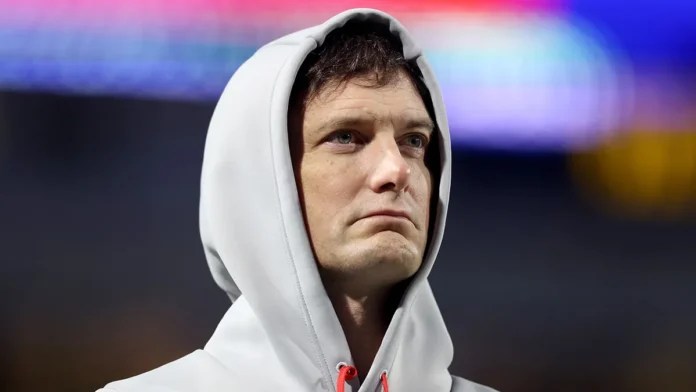
The Buffalo Bills’ decision to fire offensive coordinator Ken Dorsey in the wake of a demoralizing loss to the Denver Broncos has raised eyebrows across the NFL. With high expectations coming into the season, the Bills find themselves struggling, prompting desperate measures. However, a closer examination reveals that Dorsey may have been the wrong person to shoulder the blame for their shortcomings.
The Statistics Speak for Themselves:
While the Bills’ performance against the Broncos may paint a picture of offensive struggles, a comprehensive analysis of the team’s season performance demonstrates that their offense ranks among the league’s best. In numerous efficiency ratings and metrics, Buffalo sits within the top five, with statistics comparable to those achieved during Brian Daboll’s tenure as offensive coordinator.
Ken Dorsey Outperformed Brian Daboll:
When comparing Dorsey’s first 25 games as offensive coordinator to Daboll’s final 25 games, excluding those without starting quarterback Josh Allen, Dorsey’s performance shines. The numbers reveal that Dorsey surpassed Daboll in several key areas, contrary to popular belief.
The Turnover Scapegoat:
Dorsey’s dismissal can be attributed to the team’s struggles with turnovers. With the Bills ranking second in the NFL for giveaways, someone had to answer for these costly mistakes. Unfortunately, Dorsey became the scapegoat for poor roster construction and offensive deficiencies that have been building up over time.
Offensive Depth and Roster Issues:
The lack of reliable receiving options beyond Stefon Diggs has exposed the Bills’ offensive shortcomings. While Diggs remains a top performer, the significant drop-off in production from the team’s secondary receivers highlights the dearth of offensive firepower. This weakness was exemplified in the Broncos game when Gabriel Davis’s pass deflection led to an interception, sparking the decline in Buffalo’s offensive momentum.
The Allen Factor:
Quarterback Josh Allen’s tremendous growth cannot be ignored. His improved performance this season, evidenced by a reduced Turnover Worthy Play Rate and an impressive touchdown rate, indicates his development as a quarterback. However, Allen’s occasional reckless throws are a characteristic of his playing style, and the burden of compensating for them now lies heavily on the shoulders of the weakened defense.
A Result of Inaction:
Dorsey’s termination ultimately reflects the failure of general manager Brandon Beane and head coach Sean McDermott to address the team’s offensive shortcomings adequately. The Bills’ underwhelming efforts in addressing the wide receiver position through the draft and trade market since the Stefon Diggs acquisition have only served to magnify the issues. As the team relies on aging veterans, injuries have exposed the lack of depth and resilience within the roster.
The firing of Ken Dorsey feels more like a sacrificial lamb than a necessary change. While the Bills’ struggles this season require addressing, Dorsey’s dismissal fails to target the root causes of their deficiencies. Instead, it serves as a reflection of the front office’s inaction and inadequacies when it comes to constructing a well-rounded offensive unit. As the Bills navigate their way through a challenging season, the impact of this decision remains to be seen.
 The Business Press